c. 3500 BCE to today · Iraq
Then and Now
The ancient cities are not lost in a faraway land. They are in Iraq today, cared for by Iraqi archaeologists, guards and museum workers, and they belong to everyone who calls that land home.
The short version
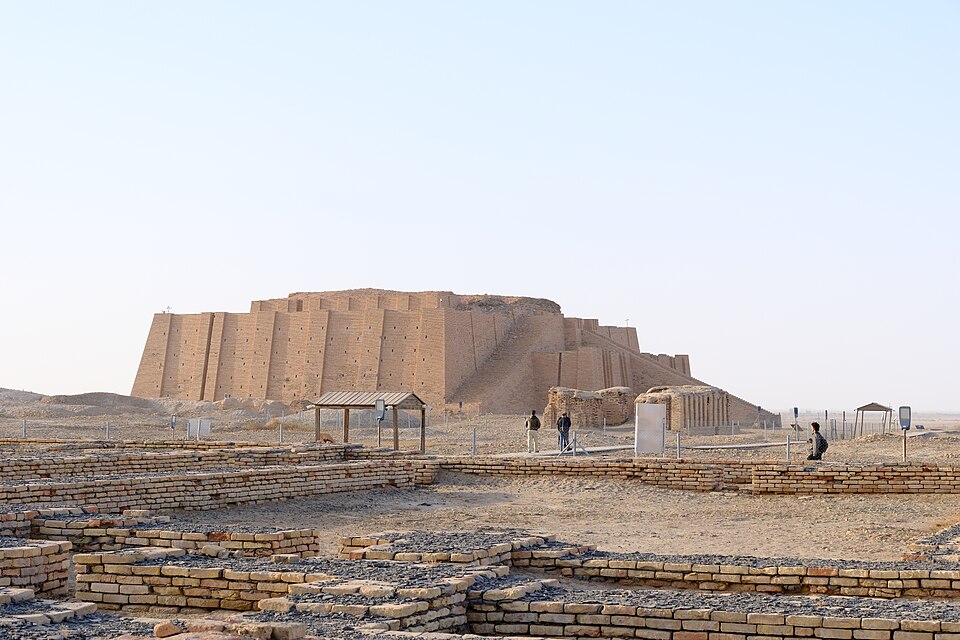
Every ancient city in this guide is a real place in modern Iraq. Ur is near the city of Nasiriyah. Nineveh is part of Mosul. You could visit them.
Some of these places have been hurt. In 2003, during a war, thieves stole objects from the Iraq Museum in Baghdad. In 2015, a violent group called ISIS damaged ancient sites and a museum near Mosul.
But this is also a story about people fixing things. Iraqi heritage workers, helped by friends around the world, have tracked down stolen treasures, rebuilt famous buildings and trained new archaeologists. Thousands of objects have come home.
Mesopotamia's heritage is shared by all the peoples of Iraq, and by their families who now live all over the world, including here in Australia. And some of its ideas are in your life right now: look at any clock.
Ancient places today
Iraq is divided into provinces (also called governorates), a bit like Australia's states. Here is where the main sites are. You can also find them on the interactive map.
| Ancient site | Society | Today | Province | World Heritage? |
|---|---|---|---|---|
| Ur | Sumer | Tell el-Muqayyar, near Nasiriyah | Dhi Qar | UNESCO 2016 |
| Uruk | Sumer | Warka, east of Samawah | Muthanna | UNESCO 2016 |
| Eridu | Sumer | Tell Abu Shahrain, south-west of Ur | Dhi Qar | UNESCO 2016 |
| Nippur | Sumer | Nuffar, near Afak | Al-Qadisiyyah | No |
| Akkad | Akkad | Not yet found, probably near Baghdad | Unknown | No |
| Assur | Assyria | Qal'at Sherqat, on the Tigris | Salah al-Din | UNESCO 2003 |
| Nimrud | Assyria | South-east of Mosul | Nineveh | Tentative list |
| Nineveh | Assyria | East bank of Mosul | Nineveh | Tentative list |
| Babylon | Babylon | Near Hillah | Babil | UNESCO 2019 |
What is a World Heritage Site?
UNESCO, part of the United Nations, keeps a list of places so important that they belong to all of humanity. Countries that sign up promise to protect them. Australia's Uluru-Kata Tjuta and the Great Barrier Reef are on the same list.
Ancient cities in a living wetland
In 2016, Ur, Uruk and Eridu were listed together with the southern marshes (the Ahwar) as one World Heritage Site. It honours both the ancient cities and the wetlands, where Marsh Arab families still build houses from reeds.
Assur, protected since 2003
Assur was listed in 2003, and also placed on the "in danger" list because of threats such as a planned dam. Nimrud and Nineveh are on Iraq's tentative list, waiting to be considered.
Loss and recovery
Wars have harmed Iraq's people most of all, and they have harmed its heritage too. Here is what happened, and how Iraqis and their partners have answered.
- 2003The Iraq Museum is looted. During the war, thieves broke into the national museum in Baghdad. About 15,000 objects were taken. Museum staff had already hidden many of the most precious treasures to keep them safe.
- 2003 onwardsTreasures come home. Iraqi officials, police and museums around the world began tracking down stolen objects. The famous Warka Vase from Uruk was returned within months. Thousands of objects have since been recovered, though many are still missing.
- 2015The Iraq Museum reopens. After years of repairs, the museum opened its doors to the public again.
- 2014 to 2017ISIS damages sites near Mosul. While the group held Mosul, it damaged the ancient sites of Nimrud and Nineveh and smashed objects in the Mosul Museum.
- 2017 onwardsIraqi archaeologists return. As soon as it was safe, Iraqi teams went back to record the damage, gather broken pieces and protect what was left. At Nineveh, they even found parts of an Assyrian palace that had never been seen before, inside tunnels dug under a hill.
- 2021Gilgamesh comes home. A clay tablet with part of the Epic of Gilgamesh, smuggled out of Iraq decades earlier, was returned from the United States, as part of a return of about 17,000 objects in total.
- 2025"Revive the Spirit of Mosul" is completed. In February 2025, UNESCO and Iraq finished rebuilding landmarks in Mosul's old city, including the Al-Nouri Mosque with its leaning Al-Hadba minaret, and the Al-Tahera and Al-Saa'a churches. Thousands of local people, many of them young, were trained and employed in the work.
- 2026The Mosul Museum. Iraqi experts, working with partners including the Louvre, the Smithsonian, the World Monuments Fund and the heritage fund ALIPH, have been restoring the museum building and its damaged objects. A full reopening was planned for 2026. Check the latest news to see if it has opened.
of Iraqi archaeologists, conservators, guards and museum staff work to protect their country's heritage. Most of them you will never hear about. They are the real heroes of this page.
A shared heritage
Iraq today is home to many peoples, with different languages and faiths. Their families have lived alongside these ruins for many generations.
- Arabs
- Kurds
- Assyrians
- Turkmen
- Mandaeans
- Yazidis
- Armenians
- Shabaks
- and others
The cities of Sumer, Akkad, Assyria and Babylon are part of the story of all of these communities, and of the whole world. No single group "owns" the past.
Assyrians are a living people, not just a name from history. Many speak a modern form of Aramaic (often called Sureth or Assyrian), and most are Christian. Large Assyrian communities live in Australia, especially in western Sydney and northern Melbourne.
Australia is also home to many Arab, Kurdish, Mandaean, Yazidi and Turkmen families with roots in Iraq. If you are one of them, this heritage is part of your story, and so is your family's own story of how you came to be here.
Talking respectfully about the past
Historians try to avoid saying one group is the "true" heir of ancient Mesopotamia. People mixed, moved and changed languages over thousands of years. It is more accurate, and kinder, to say this heritage is shared.
Words and things still with us
60 minutes, 60 seconds
The Sumerians counted in sixties (base 60). That is why an hour has 60 minutes and a minute has 60 seconds.
360 degrees
We still divide a circle into 360 degrees, a number that works neatly with base 60. Mesopotamian astronomers used it to track the stars.
Tammuz, Nisan, Adar
Some month names used today in Iraqi and Levantine Arabic, Syriac and Hebrew calendars come from the old Mesopotamian calendar. Tammuz (July in Iraq) is named after Dumuzi, a Sumerian god.
Nineveh Province
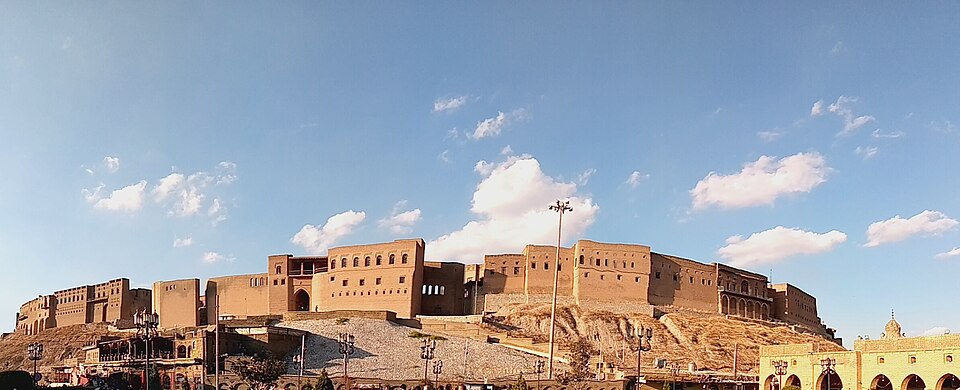
The province around Mosul is still called Nineveh (Ninawa in Arabic), after the ancient Assyrian city. Erbil, in the Kurdistan Region, is the ancient city of Arbela, lived in for thousands of years.
"Cane"
The English word "cane" came to us through Latin and Greek from a Semitic word for "reed". One of the earliest known forms is Akkadian qanû.
Is "Iraq" from "Uruk"?
Some people think the name Iraq comes from Uruk. Others think it comes from an Arabic word meaning "riverbank" or "deep-rooted". Scholars do not agree, so treat it as a fun maybe, not a fact.
Lots of websites claim many more English words come from Sumerian. Most of those claims are not supported by experts, so we have left them out.
Your turn
History is not only in museums. It is in your family too. Try one of these:
- Ask a grandparent or older relative: where did our family come from? What was the town like? What did people eat, celebrate and sing?
- Find your family's place on the map, or on a modern world map. Which ancient city is closest? Which river?
- Is there an object at home that has been in your family for a long time? Write a museum label for it: what it is, how old it is, who made it, and why it matters.
- Imagine you are an archaeologist who has just found the lost city of Akkad. Write a news report about the discovery and how you will protect it.
- Pick one place from the table above. Find out what it looks like today, and what is being done to look after it.
Some families have hard memories of leaving their homes. Be gentle when you ask, and it is fine if someone would rather not talk about it.
Dig deeper
The Iraq Museum, 2003
The museum was looted over several days in April 2003. Early reports claimed 170,000 objects were lost; the real figure was about 15,000, many of them small items such as cylinder seals. Staff had moved thousands of key pieces to secret storage beforehand. A US investigation led by Colonel Matthew Bogdanos worked with Iraqi staff, and an amnesty encouraged people to hand objects back. The looting sparked a worldwide debate about the duty of armed forces to protect cultural property, under the 1954 Hague Convention.
Looting of sites
Just as damaging, though less reported, was illegal digging at unguarded sites across southern Iraq in the 1990s and 2000s, driven by the international antiquities market. Objects dug illegally lose their context, the information about exactly where and how they were found, which is often worth more to historians than the objects themselves. This is why buying unprovenanced antiquities is a problem.
After ISIS
Mosul was retaken in 2017. Iraqi archaeologists, including Layla Salih, who was in charge of antiquities for Nineveh province, documented damage at Nimrud and found palace remains from the time of King Esarhaddon in tunnels dug under the Nabi Yunus shrine at Nineveh. Projects funded by ALIPH and others, with partners such as the Smithsonian and the University of Pennsylvania, have trained Iraqi teams in emergency stabilisation and conservation.
Questions to think about
- Should objects taken from Iraq long ago (for example, to museums in London, Paris or Berlin) be returned? What are the arguments on each side?
- When a monument is destroyed, should it be rebuilt exactly as it was, rebuilt differently, or left as a reminder?
- Who should decide: governments, local communities, scholars, or all of them together?
Sources
- UNESCO World Heritage Centre: Ashur (Qal'at Sherqat), The Ahwar of Southern Iraq, Babylon.
- The Art Newspaper (5 Feb 2025), UNESCO completes restoration of Mosul heritage sites damaged under ISIS.
- Smithsonian Magazine, Mosul Cultural Museum to reopen in 2026.
- Matthew Bogdanos, Thieves of Baghdad (2005).
- US Department of Justice and Iraqi Ministry of Culture announcements on the return of the Gilgamesh Dream Tablet (2021).