In the marshy south, where the Tigris and Euphrates meet the sea, the Sumerians built cities of mud brick, invented writing, and sent their children to the "tablet house".
The short version
Sumer was a group of cities in the south of what is now Iraq. The land was flat and hot, with almost no rain, so farmers dug canals to bring river water to their fields. Good harvests meant extra food, and extra food meant some people could become builders, priests, traders and writers instead of farmers.
Each city had its own king and its own favourite god. In the middle of the city stood a huge stepped tower called a ziggurat, with a temple on top.
The Sumerians kept track of grain, sheep and beer by pressing marks into wet clay. Over time those marks became cuneiform (say "kyoo-NAY-i-form"), one of the world's first writing systems. Boys, and a few girls, learned it at a school called the edubba, the "tablet house". That is where this website gets its name.
They also told stories, like the adventures of King Gilgamesh, and wrote some of the first laws.
Where in the worldSumer lay in the far south of modern Iraq, where the Tigris and Euphrates reach the marshes and the Gulf. The shaded area is approximate. See the full map. Mesopotamia guide · modern borders and rivers, simplified
Four great cities
Sumer was never one country. It was a patchwork of city-states (a city plus the farms and villages around it) that traded, argued and sometimes fought over water and land for about 900 years.
Uruk
Near modern Warka. By c. 3100 BCE it was probably the biggest city on Earth, with an estimated 40,000 or more people (estimates vary). Proto-cuneiform, the earliest stage of writing, was found in its temple district, Eanna.
Ur
Near modern Nasiriyah. Famous for its Royal Cemetery, full of gold, lapis lazuli and musical instruments, and for its great ziggurat. Around 2030 BCE it may have held about 65,000 people.
Lagash
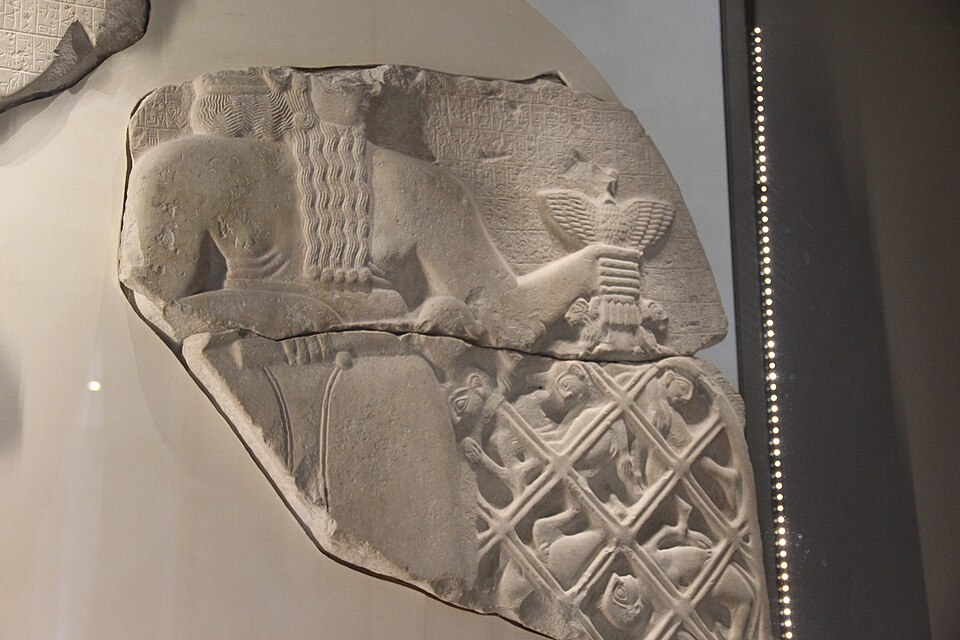
Near modern al-Hiba. Its rulers left long inscriptions, including the Stele of the Vultures (c. 2450 BCE) and the reforms of Urukagina (c. 2350 BCE), one of the first rulers to claim he protected widows and orphans.
Nippur
Near modern Nuffar. The holy city of Enlil, chief of the gods. Nippur rarely ruled anyone, but kings from other cities wanted its temple's blessing, and its scribes copied thousands of literary tablets.
Treasures from these cities
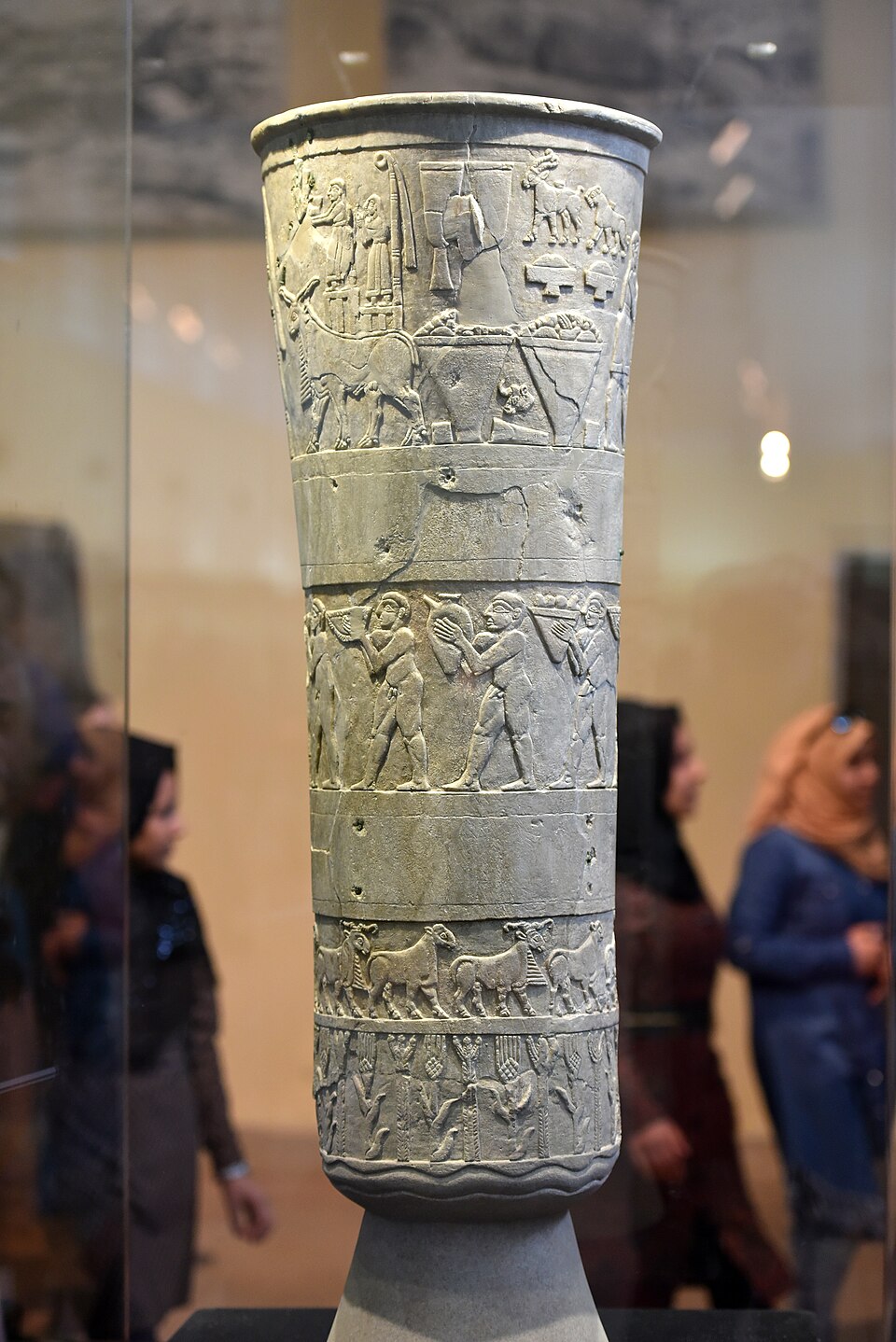
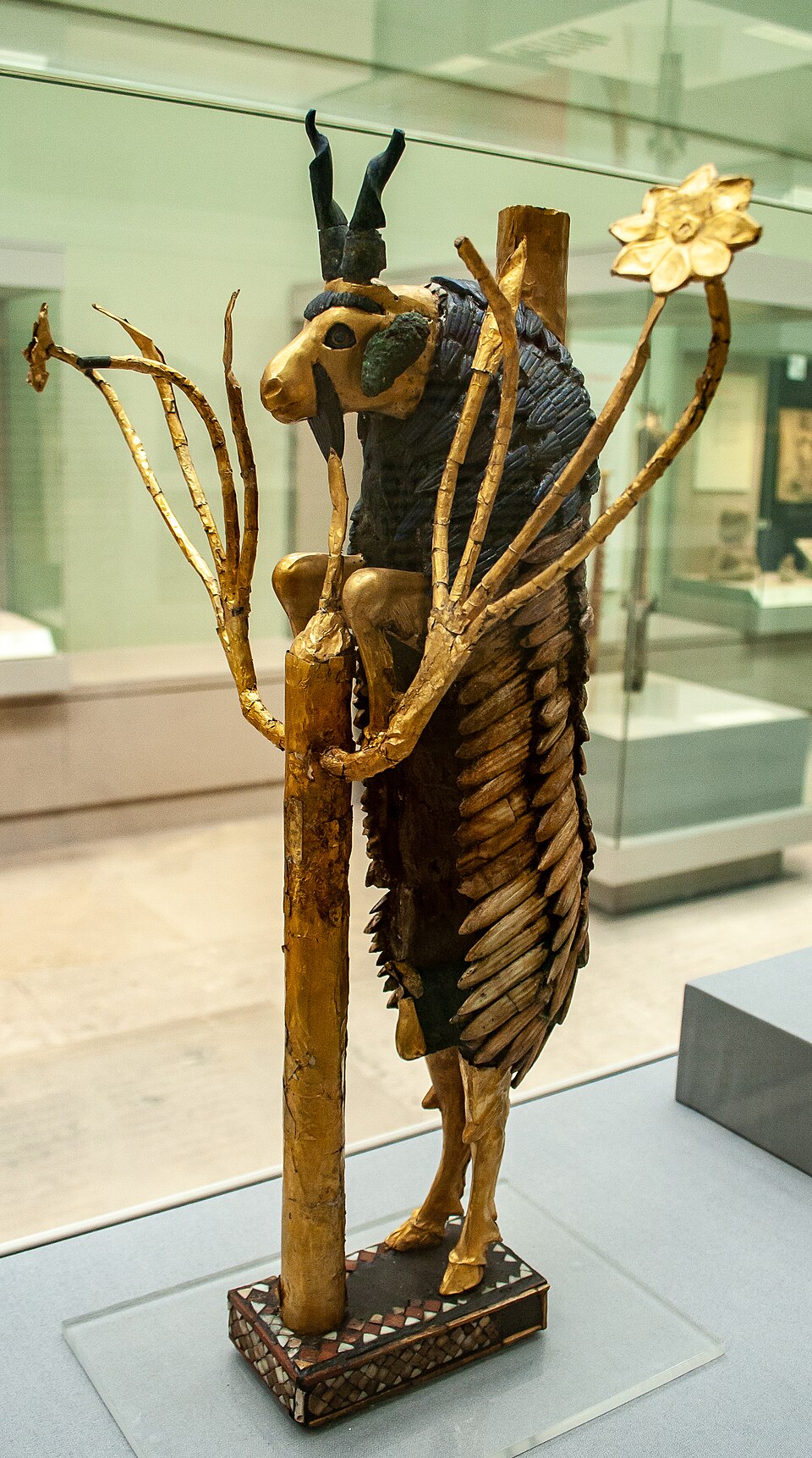
The Warka VaseCarved alabaster vase from Uruk, c. 3200 to 3000 BCE, about 1 metre tall. Its bands show water, crops, animals and people bringing gifts to the goddess Inanna. Stolen from the Iraq Museum in 2003, it was returned within months. Iraq Museum, Baghdad. Osama Shukir Muhammed Amin FRCP(Glasg) · CC BY-SA 4.0The Ram in a ThicketFrom the Royal Cemetery of Ur, c. 2600 to 2400 BCE, made of gold leaf, copper, shell, red limestone and lapis lazuli. Despite its name it is really a goat reaching up into a plant. Woolley found two; this one is in the British Museum. Szilas · CC BY-SA 4.0The Stele of the VulturesA fragment of the stone King Eannatum of Lagash set up after a border war with nearby Umma, c. 2450 BCE. This side shows Lagash's god Ningirsu holding a great net of defeated enemies, topped by his lion-headed eagle. Louvre Museum, Paris. Gary Todd · CC0
Writing: from counting to stories
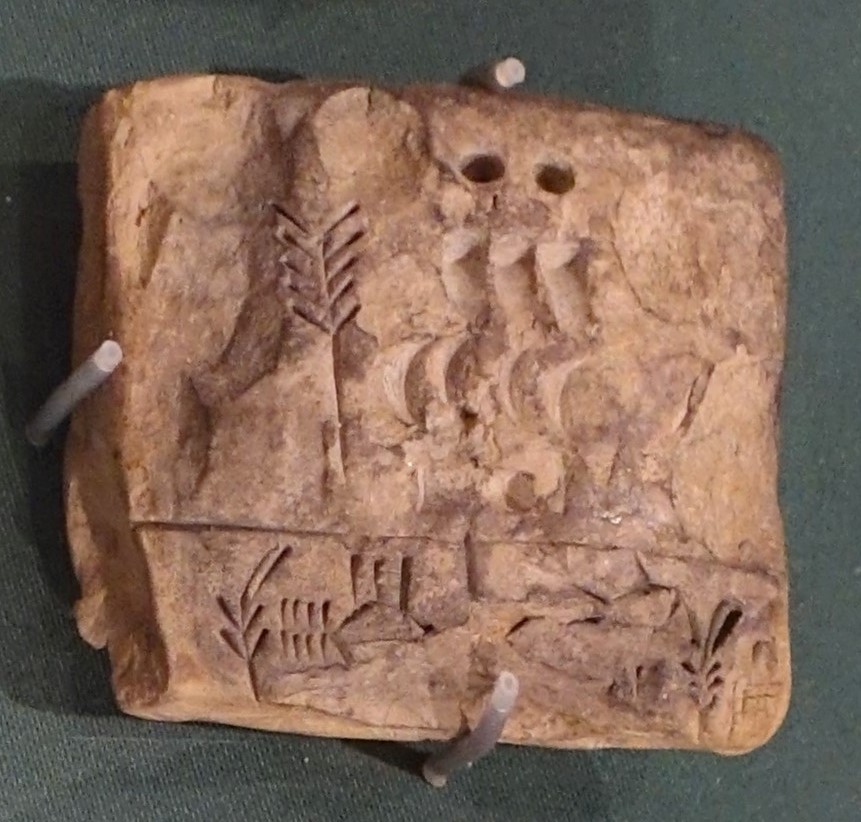
The first writing was not poetry. It was bookkeeping. Around c. 3350 to 3200 BCE, temple officials at Uruk drew little pictures and number marks on clay to record rations, animals and land. Historians usually round this to "writing c. 3200 BCE".
Over hundreds of years the pictures became wedge-shaped marks made with a cut reed. The Romans had a word for wedge, cuneus, which is where "cuneiform" comes from. A sign could stand for a whole word or for a sound, so scribes could finally write names, prayers, letters and laws.
The Sumerians also counted in sixties (base 60). We still do whenever we read 60 minutes in an hour or 360 degrees in a circle.
An early account tabletA proto-cuneiform tablet, late 4th millennium BCE: an early account record with numbers and picture-signs. Oriental Institute Museum, Chicago. Daderot, derivative by Zunkir · CC BY-SA 4.0
The edubba: school in the tablet house 𒂍𒁾𒁀
A Sumerian school was called the é-dub-ba, "the house where tablets are handed out". Pupils, mostly boys from well-off families, arrived at sunrise. The head teacher was the ummia ("expert"), helped by an older pupil called "big brother", who wrote out the model lines the younger pupils copied.
Students practised signs, copied long word lists (trees, fish, pots, gods), learned maths and measuring, and finally copied poems and hymns. One school story from about 4,000 years ago, nicknamed "Schooldays", describes a pupil being caned for talking in class and for poor handwriting, and then his father inviting the teacher home for dinner to win him over. Some things never change.
600+
signs were in regular use. Becoming a scribe took years, which is why scribes were respected, and well paid.
Gods, temples and ziggurats
Sumerians believed the gods owned the city and people worked as their servants. Each city had a patron: the moon god Nanna at Ur, Inanna (goddess of love and war) and the sky god An at Uruk, Enlil at Nippur.
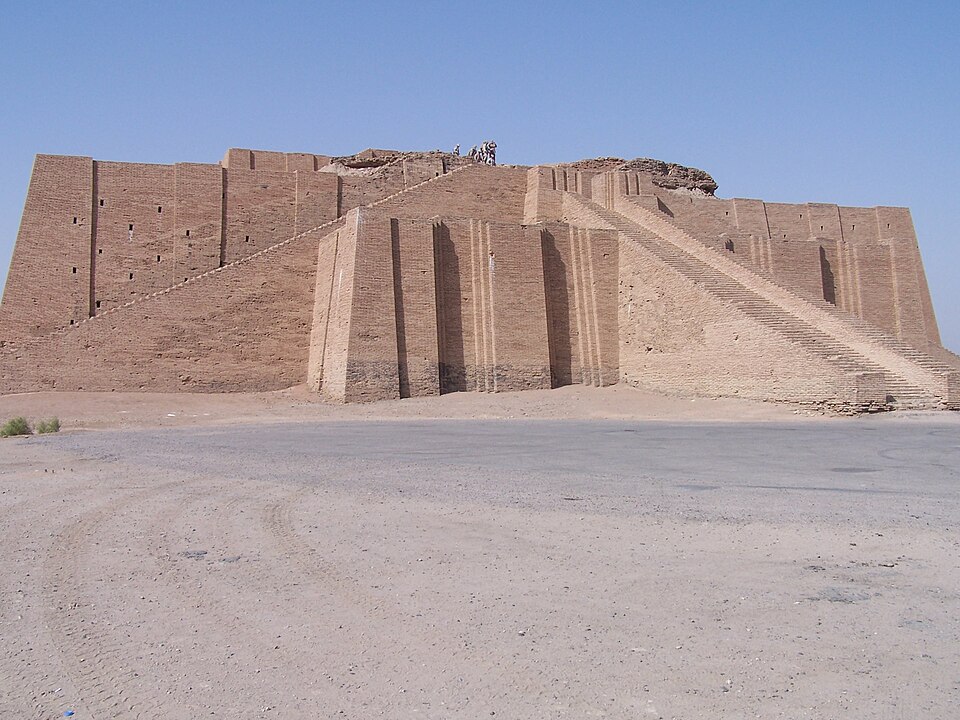
The temple sat on a ziggurat, a solid stepped platform of mud brick, raised up so it was closer to the heavens and safe from floods. The Ziggurat of Ur was built for Nanna by King Ur-Nammu (2112 to 2095 BCE). Its lower levels still stand near Nasiriyah today.
Temples were also giant workplaces. They stored grain, ran workshops and employed weavers, brewers and herders, so the people who kept records there were among the first writers.
The Ziggurat of UrThe Ziggurat of Ur, near Nasiriyah in Dhi Qar province, Iraq. The front was partly rebuilt in the 1980s. Hardnfast · CC BY 3.0
Daily life
Farmers
Most people farmed. They grew barley (for bread and beer), wheat, dates, onions and lentils, and kept sheep and goats. Keeping the canals clear of silt was hard, endless work done together.
Scribes
Scribes wrote contracts, letters, receipts and school copies. They carried a reed stylus and kept tablets damp with a cloth so they could keep writing.
Homes and food
Houses were mud brick around a small courtyard, with flat roofs where families slept on hot nights. Beer, drunk through straws to avoid the husks, was part of everyday wages.
Inventions
Wheeled vehicles (c. 3500 BCE, though where the wheel first appeared is disputed), cylinder seals for signing documents, the potter's wheel, and large-scale irrigation.
Two famous kings
Gilgamesh of Uruk
Gilgamesh is the hero of the world's oldest great story. He builds Uruk's walls, fights the monster Humbaba with his friend Enkidu, and, after Enkidu dies, searches for the secret of living forever. He learns that what lasts is the city you leave behind.
Was he real? Possibly. A king called Gilgamesh may have ruled Uruk around c. 2700 BCE, but the stories about him were written down centuries later and mix history with legend. Historians still debate it.
Ur-Nammu of Ur
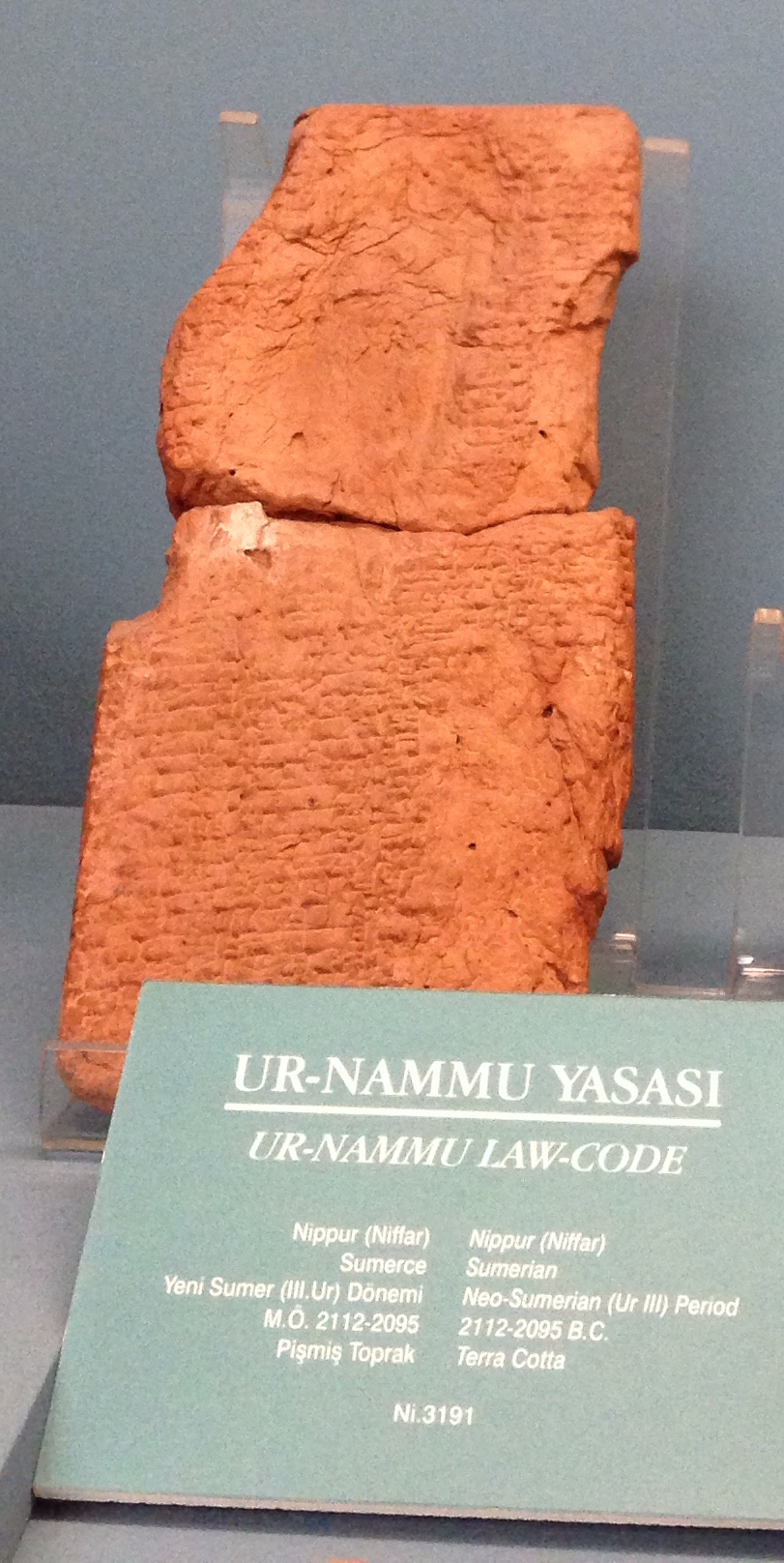
Ur-Nammu (2112 to 2095 BCE) founded a new kingdom, called Ur III by historians, built the great ziggurat, and issued the oldest law code we have found, more than 300 years before the famous laws of Hammurabi. Many punishments were fines in silver. One law says that if a man knocks out another man's eye, he must pay half a mina (about 250 grams) of silver.
Ur III ended in 2004 BCE, when the Elamites from the east sacked Ur. Sumerian stopped being spoken soon after, but scribes kept writing it for about 2,000 more years, a bit like Latin in medieval Europe.
The Code of Ur-NammuA fragment of the Code of Ur-Nammu, c. 2100 BCE, from Nippur. Istanbul Archaeology Museums. Istanbul Archaeology Museums · CC0
Neighbours from the east: the Elamites
Elam lay to the east of Sumer, in what is now south-western Iran, and its great city was Susa. The Elamites spoke their own language, unrelated to Sumerian or Akkadian, and borrowed cuneiform to write it. For centuries they traded with the cities of Sumer and fought them, and in 2004 BCE an Elamite army captured Ur and carried off its last king, Ibbi-Sin. Much later, Elamite kings took famous Mesopotamian monuments home to Susa as trophies, which is where archaeologists found them.
The Standard of Ur
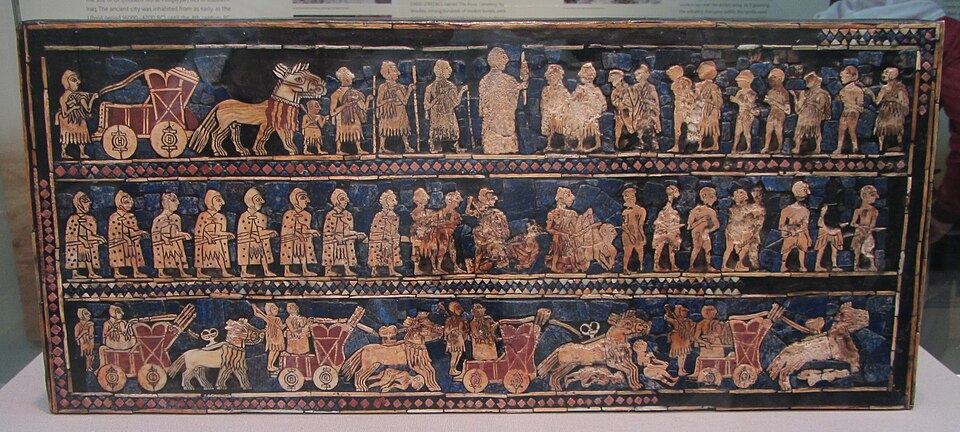
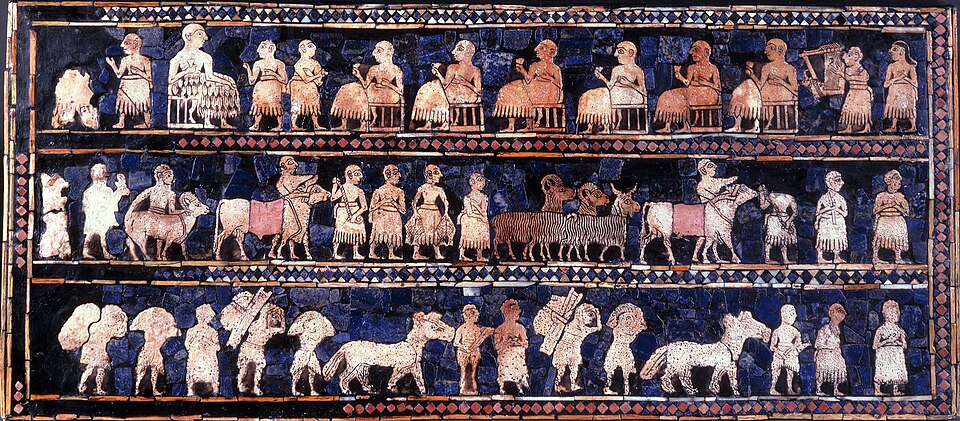
The Standard of Ur: warThe "war" side of the Standard of Ur, c. 2600 to 2400 BCE. British Museum. BabelStone · CC BY-SA 3.0The Standard of Ur: peaceThe "peace" side: animals, fish and goods brought to a royal feast with music. Unknown photographer · Public domain
Origin
Found in 1927 to 1928 by Leonard Woolley in a tomb in the Royal Cemetery of Ur. A hollow wooden box (about 50 cm long) inlaid with shell, red limestone and lapis lazuli from Afghanistan. The wood had rotted, so it was rebuilt from fragments.
Purpose
Unknown. Woolley guessed it was carried on a pole like a flag, so he called it a "standard". Others think it was the soundbox of a musical instrument or a box for treasures. Either way, it was made for the powerful.
What it shows
Each side reads like a comic strip in three rows. War: chariots, foot soldiers and captives brought to a king. Peace: workers bringing livestock and produce, and a feast with a lyre player. The king is drawn larger than everyone else.
How useful?
Very useful for weapons, clothes, chariots, music and the idea of a king who wins wars and feeds his people. Limits: it is propaganda for an elite, not a photo of ordinary life; we do not know which king or battle it shows; and the modern rebuild involved some guesswork about how the pieces fit.
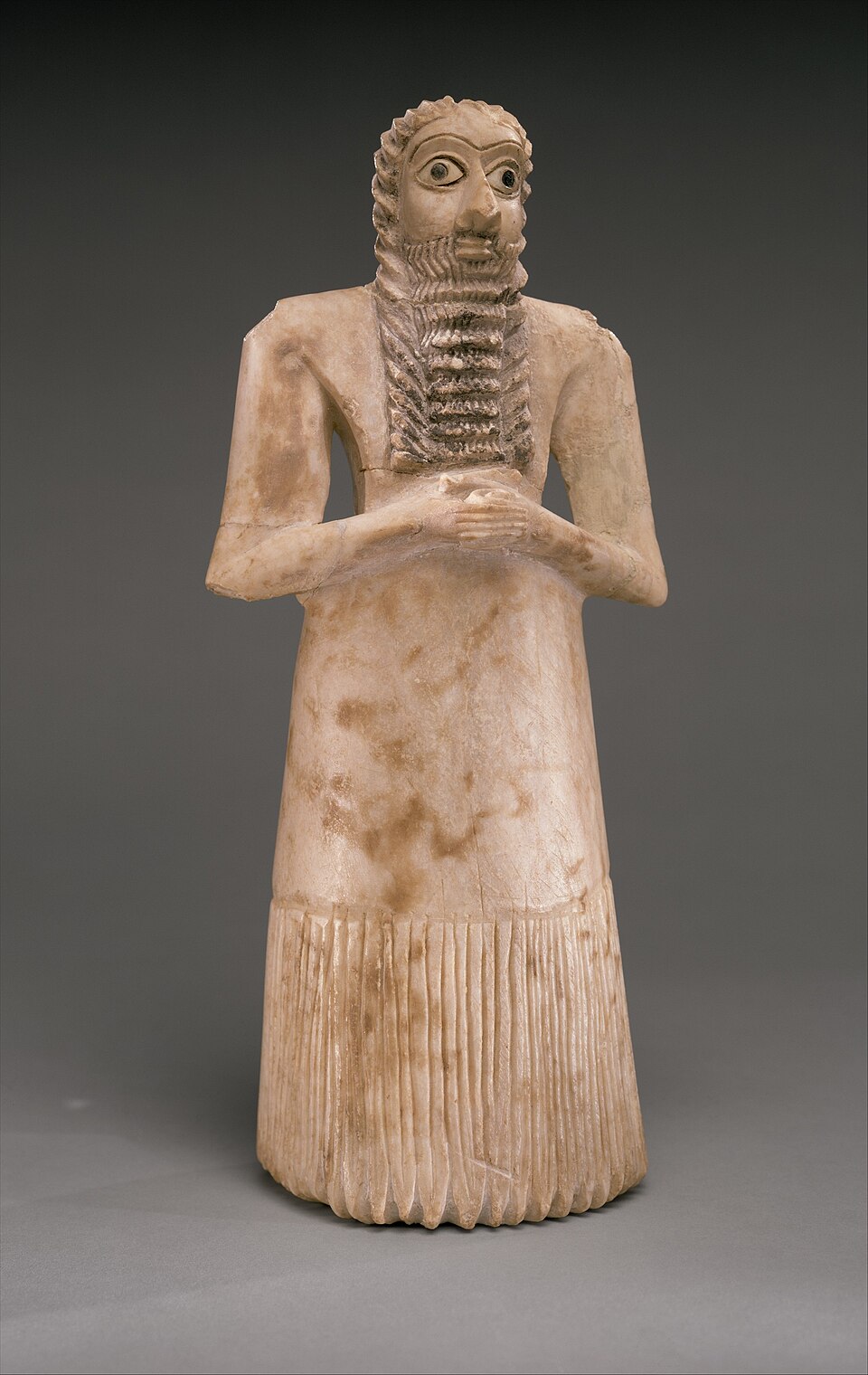
A worshipper from Tell AsmarA worshipper statue from Tell Asmar, c. 2900 to 2600 BCE. People placed statues like this in temples to keep praying for them. Metropolitan Museum of Art. Metropolitan Museum of Art · CC0
Early dates are estimates; scholars disagree by up to about 60 years. We put "c." (short for circa, "about") in front of them.
Dig deeper
Who were the Sumerians?
Sumerian is a language isolate: it is not related to any known language. Some scholars once argued the Sumerians migrated in from elsewhere; most now think southern Mesopotamia was always home to a mix of peoples, including speakers of Sumerian and of early Semitic languages like Akkadian. "Sumer" is actually the Akkadian name; the Sumerians called their land ki-en-gi.
Was writing invented only once?
Mesopotamia and Egypt developed writing at roughly the same time (late 4th millennium BCE), and it is still argued whether one influenced the other. Writing was invented independently later in China and Mesoamerica. Denise Schmandt-Besserat proposed that clay counting tokens led to writing; her theory is influential but debated, and many scholars see a more complicated path.
The Sumerian King List
The Sumerian King List names Gilgamesh and gives him a reign of 126 years, and earlier kings reign for thousands of years. It was written to argue that kingship passed from one city to the next, so it is a political document, not a neutral history. A hint that Gilgamesh might be historical: the poem Gilgamesh and Aga pits him against Enmebaragesi of Kish, a king who appears in real inscriptions.
Chronology
Dates before about 1400 BCE depend on which "chronology" historians use. This site follows the Middle Chronology, the most common in textbooks. Other systems shift early dates by decades. Even Ur III, which is well documented, is dated relative to later king lists and astronomy that are themselves debated.
Code of Ur-Nammu: some scholars credit it to his son Shulgi instead.
Books: Samuel Noah Kramer, History Begins at Sumer; Andrew George's translation, The Epic of Gilgamesh (Penguin); Harriet Crawford, Sumer and the Sumerians.