Writing
Around 3300 BCE, scribes in Uruk began pressing marks into clay. These became cuneiform ("wedge-shaped") writing, one of the world's first writing systems.
c. 3500 BCE to 631 BCE
Writing, wheels, the 60-minute hour, libraries and laws. Ideas from ancient Iraq that are still part of your day.
People in Sumer, Akkad, Assyria and Babylon solved big problems. How do you remember who owes you three sheep? You invent writing. How do you feed a city in a hot, dry land? You dig canals to bring river water to your fields.
Some of their ideas never went away. There are 60 seconds in a minute and 60 minutes in an hour because Mesopotamian scribes counted in sixties. A circle has 360 degrees partly for the same reason.
Scroll down to meet the inventions, compare cities and empires on simple charts, and try counting in sixties yourself.
Around 3300 BCE, scribes in Uruk began pressing marks into clay. These became cuneiform ("wedge-shaped") writing, one of the world's first writing systems.
Wheeled carts appear around 3500 BCE. Mesopotamia is one of the earliest places they show up, though experts still debate where the very first ones were made.
Mesopotamian scribes used a counting system based on 60, which later astronomers passed on to the Greeks. It is a big reason we have 60 minutes in an hour and 360 degrees in a circle.
Huge stepped platforms of mud brick, with a temple on top. The Ziggurat of Ur still stands in southern Iraq.
Farmers dug canals to carry water from the rivers to their fields, turning dry land into rich farms that could feed whole cities.
Small carved stone rollers. Rolled across wet clay, they left a picture that worked like a signature or a lock.
Stories about a hero-king of Uruk and his search for a way to live forever. They grew into one of the oldest great works of literature.
One of the oldest law codes ever found, written more than 300 years before the famous laws of Hammurabi. Many crimes were punished with fines.
Sargon joined many cities and peoples under one ruler. Many historians call it the world's first empire.
Akkadian became the language that people across the region used for trade, letters and treaties, for well over a thousand years.
Sargon's daughter wrote hymns to the goddess Inanna. She is the earliest author whose name we know, woman or man.
The empire used shared units for weighing and measuring, so a measure of grain meant the same thing in different cities.
King Ashurbanipal collected over 30,000 tablets and fragments at Nineveh, on subjects from medicine to stories. It is one of the first big libraries organised by subject.
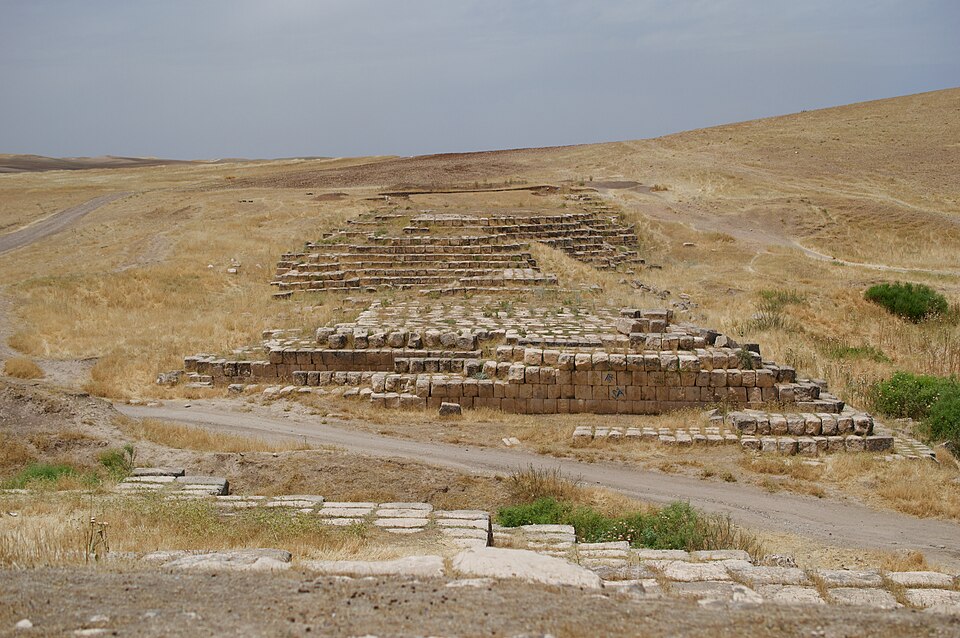
King Sennacherib built the Jerwan aqueduct, a stone bridge for water, to carry a canal from the hills towards Nineveh.
Giant stone guardians with a human head, wings and a bull's or lion's body stood at palace gates. Palace walls were lined with carved stone stories.
The empire was split into provinces run by governors. Royal roads and relay riders carried messages across the empire quickly.
Around 1754 BCE, King Hammurabi had about 282 laws carved on a stone for all to see. Not the first law code, but one of the longest and best preserved from the ancient world.
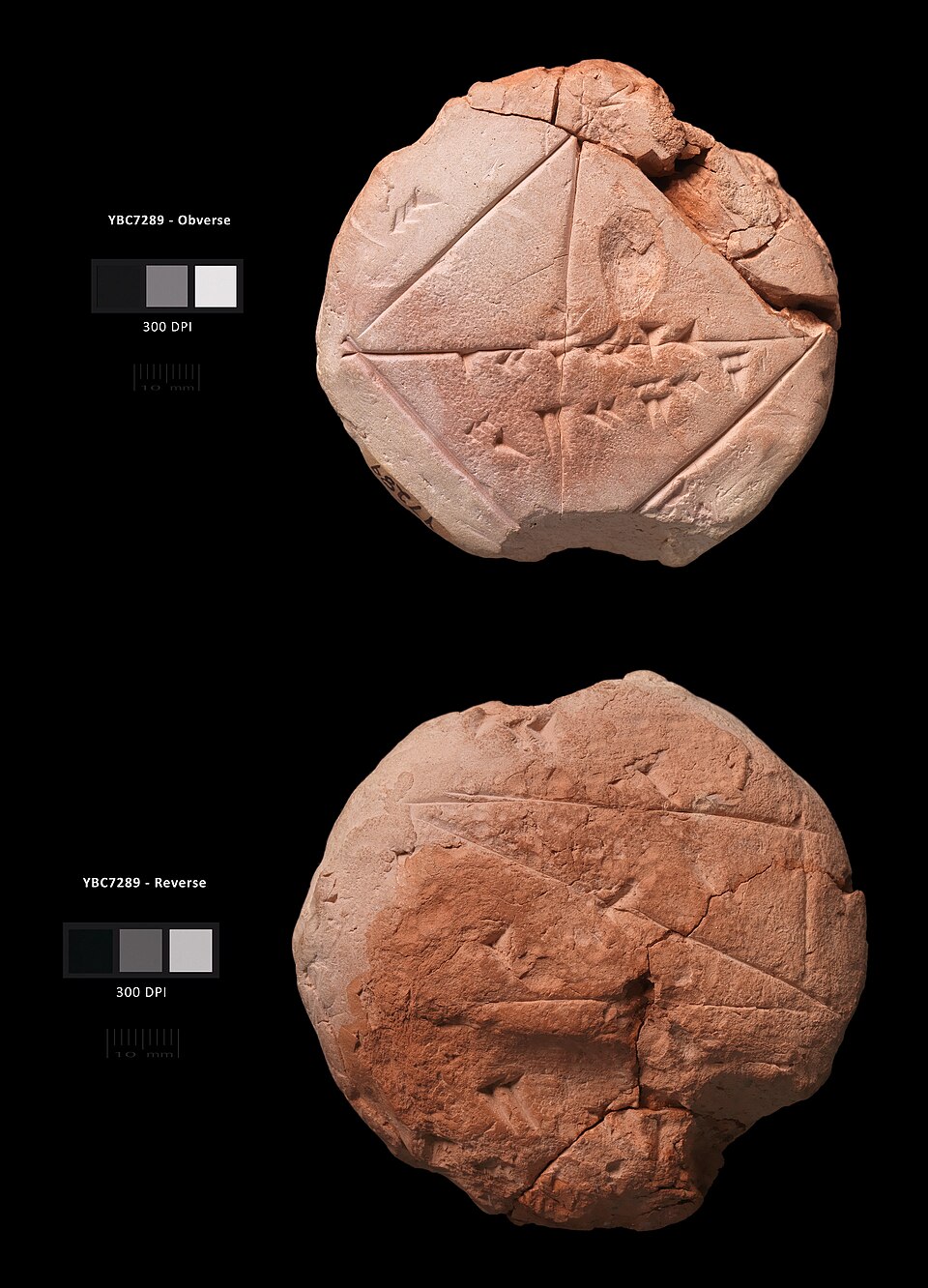
A tablet called Plimpton 322, from around 1800 BCE, lists number sets that fit the rule for right-angled triangles, over a thousand years before Pythagoras.
Babylonian astronomers recorded the night sky for about 600 years, learnt to predict eclipses, and divided the zodiac into 12 signs of 30 degrees each.
Bricks coated in coloured glaze and baked made the Ishtar Gate shine blue, with yellow lions, bulls and dragons that still look bright after 2,500 years.
These charts use estimates. Nobody counted people or tablets the way we do today, so experts give ranges. A long bar shows a range from lowest to highest estimate.
Takeaway: cities grew much bigger over time. Sennacherib's Nineveh could roughly fill the MCG (about 100,000 seats) once or even one and a half times.
These are estimates. Sources: Uruk, Ur and Nineveh (Wikipedia summaries of published archaeological estimates).
Takeaway: Assyria lasted more than ten times as long as Australia has been a nation.
These are estimates, and historians draw the start and end lines in different places. Sources: Sumer, Akkadian Empire, Assyria, Babylon (Wikipedia).
Takeaway: most tablets ever dug up have not been published yet. There are still thousands of ancient messages waiting for someone to read them. Maybe you?
These are estimates. Sources: Cuneiform Digital Library Initiative, Library of Ashurbanipal (Wikipedia).
Type a number of seconds. See how it splits into sixties, just like a clock, and how a Mesopotamian scribe might have written each part using only two wedge shapes: for 1 and for 10.
Why 60? One popular idea: use your thumb to count the 12 finger segments on one hand, and fold down a finger on your other hand for each 12. Five fingers times 12 makes 60. Nobody knows for sure, but 60 is handy because it splits evenly into 2, 3, 4, 5, 6, 10, 12, 15, 20 and 30.
No. Writing seems to have been invented separately in at least a few places: Mesopotamia and Egypt (both around 3300 to 3200 BCE), China (by about 1200 BCE) and Mesoamerica. Mesopotamian writing grew out of accounting: early Uruk tablets are mostly lists of goods, people and rations. Literature, letters and law came later.
Wheeled vehicles appear at about the same time, around 3500 to 3300 BCE, in Mesopotamia, Central Europe and the Caucasus. Some scholars think the idea spread quickly from one place; others think it was invented more than once. The potter's wheel in Mesopotamia is older still.
Archaeologists measure how big a city's area was, then multiply by how many people might have lived in each hectare, using villages today and well-studied ancient houses as guides. Small changes in the guess per hectare change the answer a lot, which is why the ranges are wide.
Early Sumerian accounts used several different counting systems depending on what was being counted. A neat place-value system in base 60, where the same sign means 1, 60 or 3,600 depending on its position, was in use by about 2000 BCE. It had no true zero at first: scribes left a gap, which could be confusing. Astronomers later passed base 60 on to the Greeks, and from them to us.
The Code of Ur-Nammu (c. 2100 BCE) predates Hammurabi's laws by about three centuries. Unlike Hammurabi's "eye for an eye" rules, many of its penalties were payments of silver.
Further reading: Irving Finkel and Jonathan Taylor, Cuneiform (British Museum Press); Eleanor Robson, Mathematics in Ancient Iraq; the Cuneiform Digital Library Initiative, where you can look at real tablets online.